The first weeks of the year are full of names, routines and administration. A short student survey can help teachers learn something more useful: what interests the learner, what helps them participate and what they want their teacher to understand.
Collect information you can use
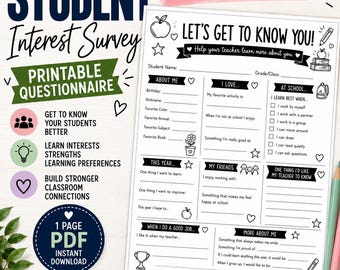
- Preferred name and basic class details so records and communication begin accurately.
- Interests and favourite topics that can support examples, reading choices and relationship-building.
- Strengths and accomplishments to avoid seeing the learner only through difficulties.
- What feels difficult at school in the learner’s own words.
- What helps when learning something new so support can become more specific.
- Goals and things the learner wants the teacher to know for a useful starting conversation.
Keep the purpose clear
A survey is not a diagnosis or a permanent label. It is a first source of information that should be considered alongside classroom observation, work samples, family communication and later conversations.
Protect student information
Collect only what is relevant, explain how it will be used and follow the school’s rules for storing completed forms. Sensitive health, family or contact information may belong in a separate approved process.
Matching live resource
Student Interest Survey
A US Letter getting-to-know-you questionnaire covering interests, preferences, strengths, school challenges and goals.